New Definitive Book Aims to Help Millions Affected by Chronic Disorganization Find Practical, Lasting Solutions
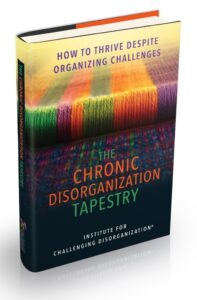

LARCHMONT, NY — A new book released August 6, 2026 by the Institute for Challenging Disorganization® aims to help those impacted by chronic disorganization as well as the professionals who work with them.
The book is titled The Chronic Disorganization Tapestry: How to Thrive Despite Organizing Challenges. Chronic disorganization is defined as disorganization that persists over a long period of time, frequently undermines quality of life, and recurs despite repeated self-help attempts.
This challenge is faced by millions of people globally, which is why the nonprofit ICD® aims to offer resources and education. The guidebook is intended not just for professional organizers but also for those who are affected by chronic disorganization and other related professionals who work with people impacted by organizing challenges.
“Whether you live with chronic disorganization or are an organizing professional working with clients, this easy-to-implement guidebook supports anyone who recognizes—and wants to address—the frustration of disorganization,” said Nacho Eguiarte, Director of Publications for ICD. “As the premier resource on chronic disorganization, ICD needed to offer clear and practical solutions for those whose quality of life has been affected by it. The Tapestry, as we affectionately call it, provides hope and guidance to face any organizing challenge successfully in your life.”
The book’s 12 chapters each tackle a chronic disorganization topic, including communicating, aging, hoarding behaviors, life transitions that impact organizing, time management, productivity, and how to give and receive support. Each chapter includes definitions, case studies, how the issue impacts people, and strategies. The strategies also include real examples, offering actionable steps for those seeking to make lasting changes in their lives.
Chronic disorganization may be present with brain-based challenges such as ADHD, anxiety, depression, hoarding disorder, post-traumatic stress disorder, or traumatic brain injury. Thus, the chapters are carefully structured to help neurodivergent minds process details faster.
“The ICD Book Publication Task Force worked closely with our authors to create a valuable resource for both professionals and those with lived experience managing chronic disorganization,” said Carolyn Caldwell, Task Force Chair. “The book is specifically structured to make it easy for the neurodivergent reader to consume. Authors have included valuable resource material and information along with strategies and practical tips anyone can apply to their situation.”
One chapter discusses how ADHD impacts organizing. The chapter author, Sara Skillen, offers a real story about “Jo.” Rather than diving right in, Jo’s professional organizer began working with her by talking about her needs and goals as well as her challenges.
“‘Getting organized’ isn’t a one-time activity, and professional organizers don’t come over and tell you what to do,” Skillen explained. “Our work digs deeper into how people will organize differently and strives to find solutions that work for them long term.”
Skillen offered some of the solutions that helped Jo, such as tackling the easiest decisions in the room first. She checked pacing and matched it to Jo’s preference and provided a flexible but clear structure for the order of operations.
For Dr. Catherine A. Roster, a researcher from the University of New Mexico, the book is “the authoritative resource for understanding chronic disorganization. As its title suggests, the book skillfully weaves together a richly detailed but highly accessible description of the characteristics, contributing factors, and challenges of living with or working with individuals affected by chronic disorganization.” According to Dr. Ari Tuckman, “It is loaded with strategies to not only help clients manage the stuff in their life but to feel good about the process and themselves.”
The book is available for purchase worldwide through all Amazon markets and through IngramSpark’s network of distribution and retail partners including Barnes & Noble.
Learn more at https://www.challengingdisorganization.org/the-chronic-disorganization-tapestry/.
About ICD
The Institute for Challenging Disorganization® is a 501(c)(3) educational organization that aims to provide education, research, and strategies to benefit people challenged by chronic disorganization. Our community is made up of professional organizers, productivity specialists, and other related professionals who work to help those affected by chronic disorganization. ICD partners with counselors, coaches, therapists, researchers, and doctors so subscribers can provide clients with strategies for working with their brains’ natural tendencies and access to the latest research, techniques, and best practices. Learn more at challengingdisorganization.org.