Past Grants

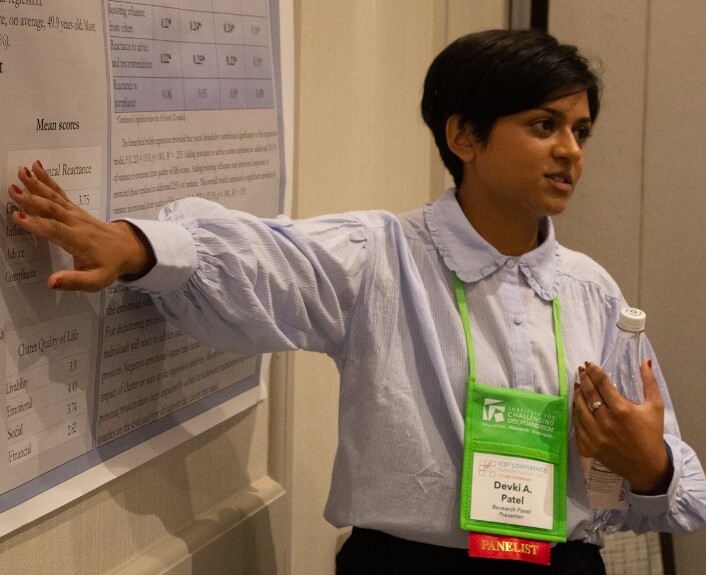
Devi Patel cropped 2022
Devki Patel, M.S. program, Psychology, DePaul University, Chicago, Illinois, USA

Three interrelated yet separate studies assessing both physical clutter in one’s home as well as virtual clutter are proposed. These projects explore the relationship between environments (real and virtual) and self-reported clutter. No empirical studies explored clutter during the COVID-19 pandemic in work and home digital settings, and in different home structures. In one study, we examine the pandemic as an environmental factor and how it impacted individuals’ decision to declutter. Given individuals’ increased time spent at home during the COVID-19 shelter in place ordinances, we explored the decision-making processes that influence one’s choice to declutter or not. In another study, we explore work and home environments and digital clutter experiences. Increased technology use has left clutter professionals wanting to explore digital clutter experiences and how different environments influenced digital clutter. Lastly, we explore different home structure environments (e.g., single-family home, apartment) and how possessing additional home structures (e.g., garage, attic) may impact an individual’s amount of clutter. It is important to assess clutter in various environments so individuals, researchers, and ICD coaches may understand how different environmental factors influence clutter or decluttering behaviors and interventions can be tailored to specific environments.
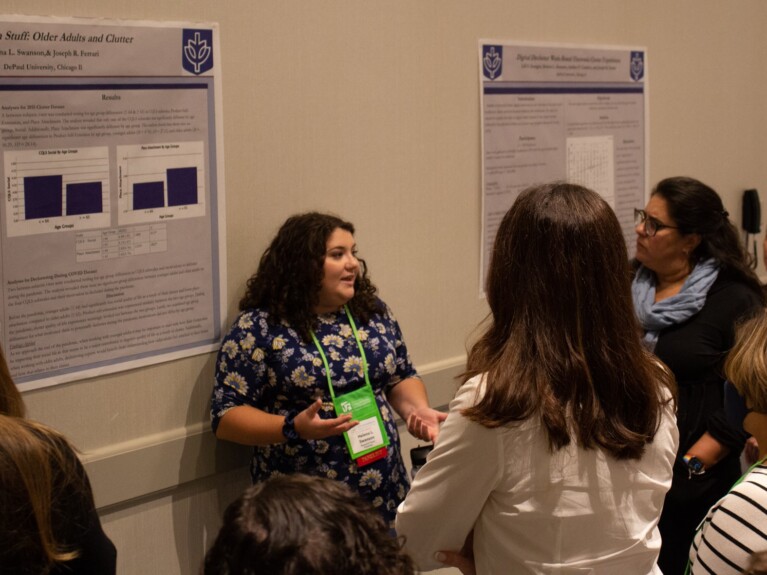
Helena Swanson - Seniors with Stuff
Helena Swanson, Community Psychology Ph.D. program, Psychology, DePaul University, Chicago Illinois, USA

– Seniors with Stuff: Older Adults and Clutter
– When There’s Just Too Much Stuff: Office Clutter by Remote Employees
– Student Shelters: Does Where Students Live (Home, Apartment, Dorm) Impact Life with Clutter?

Collectively, these three proposed studies will explore subgroups of the US population (e.g., older adults, remote workers, and college students) and their clutter and its impact on the quality of life. Exploring the amount of clutter and clutter impact for these subgroups is important as our society changes with individuals aging, transitions to increased remote working conditions, and for college students assessing the impact their overabundance of material goods may have on their life. As our world ages there is an intense need for more research on older adults and for practitioners to better understand how to serve older adults (National Institute on Aging et al., n.d.). As for remote working, projections show that 16% of employees will remain working from home long after the pandemic (Senz, 2020); it is important for organizations (such as ICD) to understand how remote workers’ environment may impact work. Lastly, previous research found that different living situations impact college students in a variety of ways (Brevard & Ricketts, 1996), but clutter’s impacts based on student living space was not explored. Taken together, these projects contribute understanding to individuals, communities, and organizations, like ICD’s declutter coaches, of how clutter may be impacting these subgroups.
7
David Charles, M.S., Ph.D. program, Psychology, Rosalind Franklin University of Medicine and Science, North Chicago, Illinois, USA

Hoarding Disorder (HD) is a serious psychiatric condition that is characterized by excessive acquisition, difficulty discarding, and clutter. While HD has been included as a separate diagnosis in the DSM-V, more research is needed to fully understand how HD is distinct from other disorders such as OCD and to improve treatments available for HD. The current cognitive-behavioral theoretical model of HD suggests that the disorder is in part caused by information processing deficits, which impacts various executive functions such as organization. Initial studies have attempted to measure organization skills by utilizing sorting tasks and explicit category learning tasks (e.g., the Wisconsin Card Sorting Task). To date, studies utilizing these tasks have been inconclusive and explicit category learning deficits are commonly found in individuals with OCD. Preliminary neurobiological studies of hoarding behaviors suggest that these individuals may suffer from implicit category learning deficits. The current proposed study aims to compare implicit category learning performances among individuals with HD, OCD, and other anxiety disorders to help further elucidate the distinctions between these disorders. Doing so may also better inform treatments and strategies to help address the chronic disorganization that helps maintain dysfunction in individuals who hoard or similar difficulties.
architecto-amet-doloribus
Rachael Suffrin, Clinical/Community Psychology Ph.D. Student, and Juline Girts, Psychology Masters Student of DePaul University, Chicago, Illinois, USA

The purpose of this study is to explore the relationships between clutter and quality of life. In this study, we are exploring the quality of life in terms of a stronger psychological sense of home and sense of community. As many intentional living communities proactively work towards building a sense of community and developing more than “just a home” for residents (with some also subscribing to a living simply philosophy), examining how beliefs, expectancies and attitudes about “home” may differ between intentional living communities, and traditional living situations (e.g., with roommates, living alone, in a dorm) will help to better understand the relationship between sense of community, home, clutter, and disorganization, as well as place and object attachment. Although many studies rely almost exclusively on self-report methods, this study exemplifies ingenuity and innovation by utilizing a combination of not only self-report, but also structured in-home observations with individuals across multiple samples (i.e., college student, post-undergraduate fellows, and adults in the community) to gain a clearer sense of how these variables interconnect. Findings may help to better understand how to improve the quality of life for individuals living in chronic disorganization and clutter.
8 (1)
Kim Stetson Bolstad, B.A., and Taylor Wolf, B.S. Masters Program, Professional Mental Health Counseling, Lewis & Clark Graduate School of Education and Counseling, Portland, Oregon, USA

This qualitative study will identify benefits that self-identified “chronically disorganized” individuals gain from attending a clutter support group.  The support group, designed by the authors, is a psychoeducation focused group helping participants learn and gain insight into their own individual hoarding situations, and teaches participants decluttering and organizing skills.  The trial support group, January to February 2016, received positive feedback from all group members.  For this proposed study, the group will meet weekly for 10 weeks, between May and July 2016.  Both authors will facilitate each 90-minute session.  The group will be closed to a maximum of 7 individuals.  At the end of the session participants will complete a feedback survey rating their satisfaction with the session, motivation to declutter, and confidence in their ability to change. At the conclusion of the 10 weeks participants will fill out a survey regarding the benefits gained from attending the group. The goal of this research is to highlight the importance of a formal support group in treating chronic disorganization and create a curriculum that may be followed by clinicians working with individuals who suffer from chronic disorganization and/or hoarding disorder. 
Architecto Amet Doloribus
Delinda Free, M.S.W. and Matthew Strickland, M.S.W., Masters Program, Social Work, Portland State University School of Social Work, Portland, Oregon, USA

Hoarding and excessive clutter are the subject of now hundreds of research articles, dozens of episodes of television programs, countless cartoons and catch-phrases such as “she’s such a hoarder.” The individuals who engage in hoarding and cluttering behaviors are often singularly and narrowly defined and lack the ability to share their view and voice around a situation that impacts them most intimately. In an effort to standardize the study of hoarding and understand the problem more effectively, the perspective of people who hoard and clutter is sometimes lost amidst the data and professionalism. In this small-scale qualitative study using the person-centered empowering data collection method of Photovoice, people with hoarding and cluttering behavior will share their perspective on their quality of life. The findings from this study may be useful to other sufferers, family members, human service providers and policy makers.
Divider icon

Collaborations

A Comparative Analysis of the Effect of Decluttering on Women During the Covid-19 Pandemic

Author: Zachary H. Ellis, MA, PhD Candidate. ICD 2024 Student Research Grant White Paper: January 2025. This white paper asks the question: Are decluttering projects a practical solution to the loss of a sense of control and elevated fear levels felt during times of significant distress, such as the Covid-19 pandemic?

The current study explored the impact of successful decluttering projects on regaining control to reduce fear of Covid for women living in regions experiencing high levels of reactance. While the results did not support the study’s hypothesis, those results do highlight the importance of professional help in decluttering projects. It emphasizes the need for professional guidance in maximizing the impact of decluttering efforts and urges researchers to explore universal interventions adaptable to broad audiences. Download a copy of the entire White Paper: A Comparative Analysis.

Zach Ellis presented his initial results at the ICD Conference in Minneapolis, MN in September 2024.

Divider icon

Having Less: A Personal Project Taxonomy of Consumers’ Decluttering Orientations, Motives, and Emotions

Authors: Dr. Catherine A. Roster & Dr. Joseph R. Ferrari. Published: Journal of Consumer Affairs. Date: December 7, 2022. How do emotions and motivations about decluttering affect the success of decluttering projects? This article examines how people perceive decluttering and how those perceptions affect their motivations and success in completing personal decluttering projects. The authors offer a number of suggestions for professional organizers and coaches to ease the stress and anxiety that some people experience during the organizing process. They also have suggestions for community services that would benefit people trying to reduce their clutter. Download A Summary of Having Less.

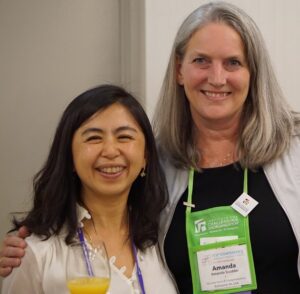
Res Dir Amanda Scudder & Researcher Dr Chou 2022

Res Collab Ferrari 2023

Divider icon

Who and Where? Researching Different Clutter Experiences by Adult Subgroups and Varied Environments

Authors: Helena Lucia Swanson and Devki A. Patel, Recipients of the 2022 ICD Student Research Grants. Graduate Students in the Dept. of Psychology at DePaul University. Presented at: The 2022 ICD Conference held in Chicago. Clutter is a problem that plagues almost everyone. With clutter being such a widespread experience, it is crucial to understand why people keep their items and how keeping objects impacts people negatively. Throughout this paper, we report the results of seven (7) research projects providing a deeper understanding of people’s experiences with clutter. More specifically, we dive into: (1) what phenomena are related to clutter, (2) why people keep their clutter, (3) how clutter impacts people, and (4) how different people may be impacted differently by their clutter. In addition to highlighting people’s experiences with clutter supported by research findings, we detail how these results may be incorporated into interventions by organizing and productivity professionals. Download a copy of the entire White Paper: Who and Where?

Divider icon

Other Collaborations

“The Impact of Hoarding Cleanouts.”  Collaboration with The Hoarding Project (THP), a 501(c)(3) non-profit organization aimed at providing education, research, and treatment for people who hoard, their families, and communities.

“Hoarding and the Family” Collaboration with Jennifer Sampson, M.S., LMFT,  then a doctoral candidate in the Department of Family Social Science at the University of Minnesota – Twin Cities. 

Psychological Perception of Home: *This is one of the two studies which includes the Clutter Quality of Life (CQLS) scale, developed by Dr. Roster, in collaboration with ICD.* Catherine Roster, Ph.D., Associate Professor at University of New Mexico and Dr. Joseph Ferrari, Distinguished Professor at DePaul University. Purpose: to learn how clutter impacts a person’s psychological sense of “home.”  

“The Secret Lives of Objects” Collaboration with Corinne Botz, a Brooklyn-based artist, professional photographer, and author of the book The Nutshell Studies of Unexplained Death (Monacelli Press, 2004). This project considered how objects are connected with our memories, our sense of self, and the process of letting go of possessions. The ultimate goal of this project was to shed light on the relationship people have with objects, as well as the act of anonymously gifting sentimental objects to strangers.

Factors leading to Compulsive Hoarding in Adulthood and across the Life Span Collaboration with Capella University graduate student, Tracey M. Biagas. 

Fathers of Children with ADHD Collaboration with Abigail Mintz, MS, who at the time was a doctoral student at the University of Maryland, College Park. This study was designed to learn more about the experiences of fathers of children (age 5-12) who have ADHD or undiagnosed significant attention/disruptive behavior problems. As little is known about parenting behaviors, especially those of fathers, this study provides knowledge that can improve treatment for families of children with ADHD. 

Safe Passage Strategies Used by Professional Organizers Led by Catherine A. Roster, Ph.D., University of New Mexico. This study examined factors and strategies used by professional organizers to help clients let go of possessions. Safe Passage appeared to represent a peaceful state of mind clients realized from successfully navigating the emotional, cognitive, and decision-making challenges associated with letting go of meaningful goods. 

Survey of Organizing Techniques Used by Professional Organizers with Chronically Disorganized Clients Led by Kit Anderson, former ICD Research Director, examined the frequency of use of the organizing techniques originally proposed for CD clients by Judith Kolberg in What Every Organizer Should Know About Chronic Disorganization. Findings were that “body doubling” was by far the most used technique, followed by avoiding “tactile sympathy.” About half used “maintenance sessions,” “recommending support services,” “treasure hunting,” “sampling/playing favorites,” and “shrines.” Just under half regularly used the “muttering game” and usage of other techniques was much lower.

Development of a Chronic Disorganization Inventory Collaboration with Sharon Mintz, MS, who at the time was a doctoral student at Fordham University, in a project to develop a Chronic Disorganization Inventory. Results indicated that the 60-item Chronic Disorganization Inventory is a psychometrically sound instrument that can be used to assess the level and subtypes of chronic disorganization. 

Decision Making Among Elderly Clients with Hoarding and Clutter-related Issues Collaboration with Monika Eckfield Petross, RN, MSN, who at the time was a doctoral student at the University of California at San Francisco School of Nursing, to conduct a pilot study designed to explore the experience of elderly individuals with hoarding and cluttering behaviors. A variety of reasons for decision-making difficulties were given by participants, including a fear of making mistakes, inability to prioritize, the struggle between emotional attachment and logical decisions, and others.

“I Think I have a problem with Clutter” University of California, San Francisco (UCSF) and the Mental Health Association of San Francisco (MHASF).